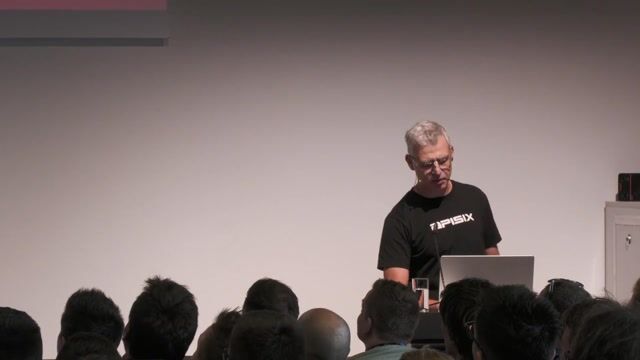
Nicolas Fränkel
Evolving your APIs, a step-by-step approach
#1about 1 minute
The challenge of evolving APIs without breaking changes
Evolving an API is difficult because initial development focuses on domain modeling, not long-term versioning strategies.
#2about 5 minutes
Using an API gateway instead of a reverse proxy
An API gateway is a specialized reverse proxy that handles modern, complex requirements like dynamic configuration and client-specific rate limiting.
#3about 4 minutes
Setting up the initial proxy route with Apache APISIX
The first step is to configure the API gateway to proxy requests to the existing upstream service without any downtime.
#4about 3 minutes
Creating a versioned route with path rewriting
Introduce a versioned path like /v1 and use the API gateway to rewrite the request path before forwarding it to the upstream service.
#5about 1 minute
Redirecting legacy endpoints using an HTTP 301 response
Deprecate the old, unversioned endpoint by configuring the API gateway to return an HTTP 301 permanent redirect to the new versioned URL.
#6about 5 minutes
Implementing rate limiting to encourage user registration
Use a custom Lua plugin to enforce rate limits on unauthenticated users, prompting them to register to get an API key for unlimited access.
#7about 2 minutes
Canary releasing the new API version with traffic splitting
Safely roll out the new API version by configuring the gateway to split a percentage of production traffic between the old and new upstreams.
#8about 2 minutes
Deprecating an old API version using HTTP headers
Formally deprecate the V1 endpoint by adding Deprecation, Link, and Sunset headers to the response, guiding clients to the new V2 endpoint.
#9about 6 minutes
Q&A on API versioning and management strategies
The audience asks questions about rate limiting per token, managing multiple versions, reverting changes, and the definition of API management.
Related jobs
Jobs that call for the skills explored in this talk.


Matching moments
05:01 MIN
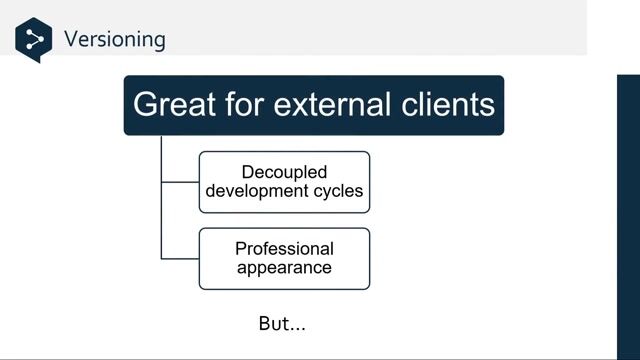
Evolving an API without versioning using a fallback pattern
Designing gRPC APIs - The things they don't tell you
Unlock Moments
Create a free account to watch a limited number of Moments each month.
Upgrade to PRO for unlimited access to the full archive.
Upgrade to PRO for unlimited access to the full archive.
You have an account? Log in
01:50 MIN
The challenges of building and maintaining APIs
API = Some REST and HTTP, right? RIGHT?!
Unlock Moments
Create a free account to watch a limited number of Moments each month.
Upgrade to PRO for unlimited access to the full archive.
Upgrade to PRO for unlimited access to the full archive.
You have an account? Log in

03:57 MIN
Q&A on adopting new web APIs
Explore new web features before everyone else
Unlock Moments
Create a free account to watch a limited number of Moments each month.
Upgrade to PRO for unlimited access to the full archive.
Upgrade to PRO for unlimited access to the full archive.
You have an account? Log in
02:52 MIN
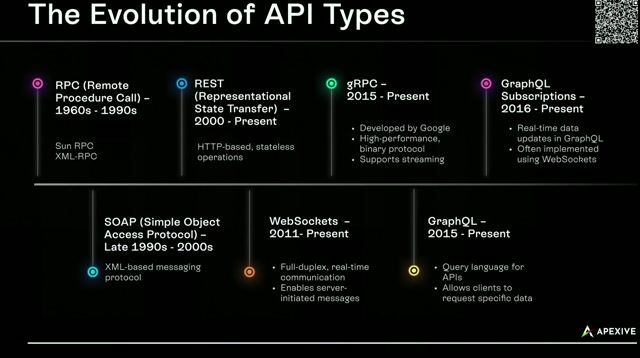
Tracing the evolution of APIs from RPC to GraphQL
The Great API Debate: REST, GraphQL, or gRPC?
Unlock Moments
Create a free account to watch a limited number of Moments each month.
Upgrade to PRO for unlimited access to the full archive.
Upgrade to PRO for unlimited access to the full archive.
You have an account? Log in
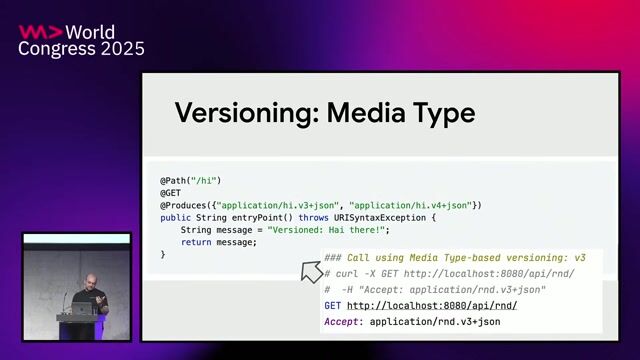
02:09 MIN
A practical guide to deprecating old API versions
API = Some REST and HTTP, right? RIGHT?!
Unlock Moments
Create a free account to watch a limited number of Moments each month.
Upgrade to PRO for unlimited access to the full archive.
Upgrade to PRO for unlimited access to the full archive.
You have an account? Log in
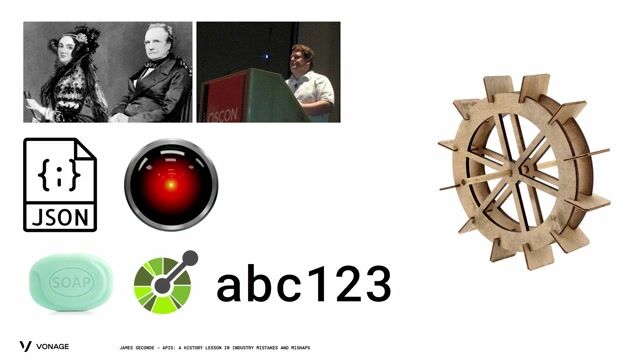
01:24 MIN
The cyclical nature of API design and development
Awful APIs: A History Lesson in Industry Mistakes and Mishaps
Unlock Moments
Create a free account to watch a limited number of Moments each month.
Upgrade to PRO for unlimited access to the full archive.
Upgrade to PRO for unlimited access to the full archive.
You have an account? Log in
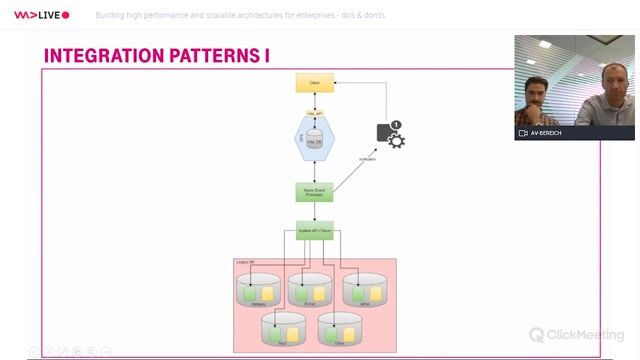
04:07 MIN
Implementing data aggregation and API management
Building high performance and scalable architectures for enterprises
Unlock Moments
Create a free account to watch a limited number of Moments each month.
Upgrade to PRO for unlimited access to the full archive.
Upgrade to PRO for unlimited access to the full archive.
You have an account? Log in
01:53 MIN
Using APIs to compartmentalize complexity and enable scalability
The Great API Debate: REST, GraphQL, or gRPC?
Unlock Moments
Create a free account to watch a limited number of Moments each month.
Upgrade to PRO for unlimited access to the full archive.
Upgrade to PRO for unlimited access to the full archive.
You have an account? Log in
Featured Partners
Related Videos
 28:55
28:55Awful APIs: A History Lesson in Industry Mistakes and Mishaps
James Seconde
 27:17
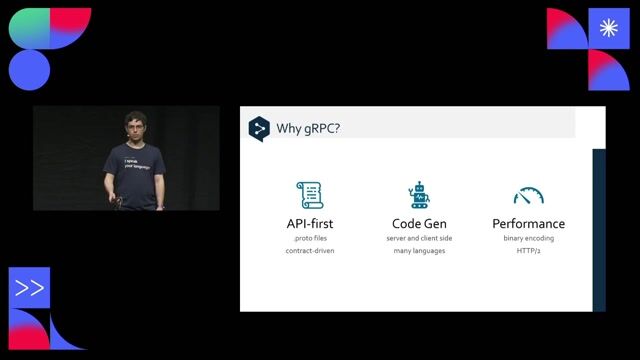
27:17Designing gRPC APIs - The things they don't tell you
Bastian Eicher
 46:48
46:48Seven Myths, Three Reasons, One Goal
Stefan Priebsch
 20:29
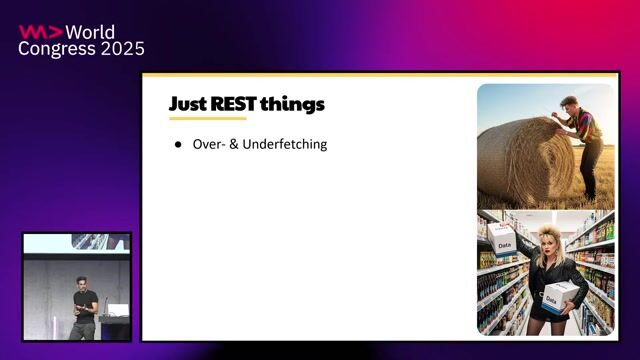
20:29REST in Peace? What does the API protocol of the future look like? Or do we have it already?
Simon Auer
 58:52
58:52Get ready for new features - the legacy challenge
Hans Hosea Schäfer
 28:16
28:16The Great API Debate: REST, GraphQL, or gRPC?
Alexis Yushin
 29:30
29:30Lessons from Our API Past: Evolving to a Resilient API Future
Yousaf Nabi
 46:24
46:24The Rise of Reactive Microservices
David Leitner
Related Articles
View all articles



From learning to earning
Jobs that call for the skills explored in this talk.


CONTIAMO GMBH
Berlin, Germany
Senior
Python
Docker
TypeScript
PostgreSQL




Speech Processing Solutions
Vienna, Austria
Intermediate
CSS
HTML
JavaScript
TypeScript

Peter Park System GmbH
München, Germany
Senior
Python
Docker
Node.js
JavaScript



Peter Park System GmbH
München, Germany
Intermediate
Senior
Python
Node.js
JavaScript

doinstruct Software GmbH
Berlin, Germany
Intermediate
Senior
Node.js

AUTO1 Group SE
Berlin, Germany
Intermediate
Senior
ELK
Terraform
Elasticsearch