
Natan Silnitsky
Advanced Caching Patterns used by 2000 microservices
#1about 7 minutes
Why caching is critical for services at scale
Caching reduces latency, lowers infrastructure costs, and improves reliability by making services less dependent on databases or third-party services.
#2about 1 minute
Knowing when not to implement a cache
Avoid adding a cache prematurely for young products with low traffic, as it introduces unnecessary complexity, potential bugs, and additional failure points.
#3about 4 minutes
Caching critical configuration with an S3-backed cache
Use a read-through cache backed by S3 to store static, rarely updated configuration data, ensuring service startup reliability even when dependencies are down.
#4about 6 minutes
Building a dynamic LRU cache with DynamoDB and CDC
Implement a cache-aside pattern using an in-memory LRU cache backed by DynamoDB and populated via Kafka CDC streams to reduce database load for frequently accessed data.
#5about 5 minutes
Using Kafka compact topics for in-memory datasets
For smaller datasets, use Kafka's compact topics to maintain a complete, up-to-date copy of the data in-memory for each service instance.
#6about 6 minutes
Implementing an HTTP reverse proxy cache with Varnish
Use a reverse proxy like Varnish Cache with a robust invalidation strategy to dramatically reduce response times for services with expensive computations like server-side rendering.
#7about 4 minutes
A decision tree for choosing the right caching pattern
Follow a simple flowchart to select the appropriate caching strategy based on whether the data is for startup, dynamic retrieval, or stable HTTP responses.
#8about 12 minutes
Q&A on caching strategies and implementation details
The discussion covers HTTP header caching, custom invalidation logic, handling the "thundering herd" problem, and the choice of JVM for high-performance services.
Related jobs
Jobs that call for the skills explored in this talk.


Matching moments

02:46 MIN
Moving to the cloud and implementing Varnish cache
Scaling: from 0 to 20 million users
Unlock Moments
Create a free account to watch a limited number of Moments each month.
Upgrade to PRO for unlimited access to the full archive.
Upgrade to PRO for unlimited access to the full archive.
You have an account? Log in

03:00 MIN
Implementing resilience patterns like caching and fallbacks
Microservices with Micronaut
Unlock Moments
Create a free account to watch a limited number of Moments each month.
Upgrade to PRO for unlimited access to the full archive.
Upgrade to PRO for unlimited access to the full archive.
You have an account? Log in
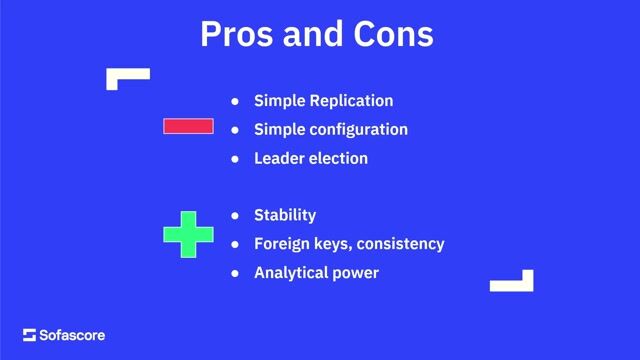
01:31 MIN
Optimizing cache efficiency with a dedicated sharded layer
Scaling: from 0 to 20 million users
Unlock Moments
Create a free account to watch a limited number of Moments each month.
Upgrade to PRO for unlimited access to the full archive.
Upgrade to PRO for unlimited access to the full archive.
You have an account? Log in

02:44 MIN
Using distributed caches to reduce database load
In-Memory Computing - The Big Picture
Unlock Moments
Create a free account to watch a limited number of Moments each month.
Upgrade to PRO for unlimited access to the full archive.
Upgrade to PRO for unlimited access to the full archive.
You have an account? Log in
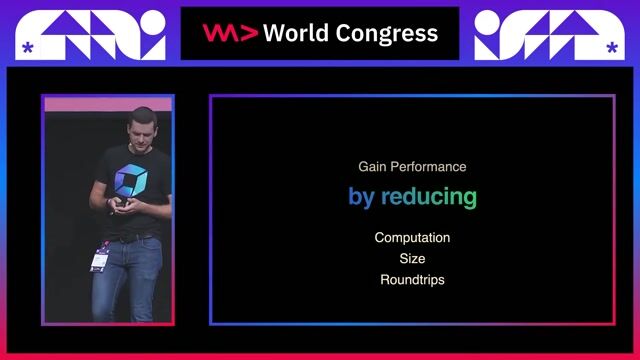
03:41 MIN
Reducing server load with build steps and caching
Sleek, Swift, and Sustainable: Optimizations every web developer should consider
Unlock Moments
Create a free account to watch a limited number of Moments each month.
Upgrade to PRO for unlimited access to the full archive.
Upgrade to PRO for unlimited access to the full archive.
You have an account? Log in

05:27 MIN
Implementing caching strategies with service workers and Workbox
Progressive Web Apps - The next big thing
Unlock Moments
Create a free account to watch a limited number of Moments each month.
Upgrade to PRO for unlimited access to the full archive.
Upgrade to PRO for unlimited access to the full archive.
You have an account? Log in
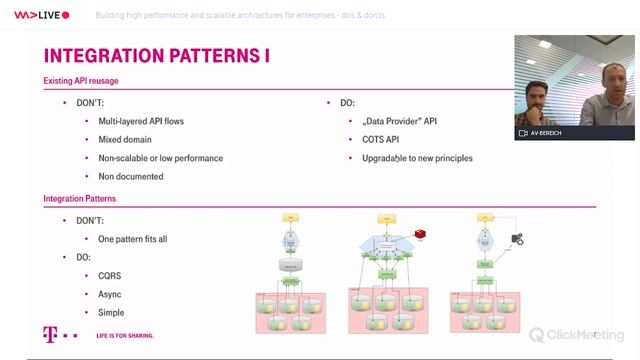
05:05 MIN
Applying patterns for data replication, caching, and commands
Building high performance and scalable architectures for enterprises
Unlock Moments
Create a free account to watch a limited number of Moments each month.
Upgrade to PRO for unlimited access to the full archive.
Upgrade to PRO for unlimited access to the full archive.
You have an account? Log in

03:38 MIN
Q&A on cache strategies and dynamic content
Offline first!
Unlock Moments
Create a free account to watch a limited number of Moments each month.
Upgrade to PRO for unlimited access to the full archive.
Upgrade to PRO for unlimited access to the full archive.
You have an account? Log in
Featured Partners
Related Videos
 28:12
28:12Scaling: from 0 to 20 million users
Josip Stuhli
 45:48
45:48Kafka Streams Microservices
Denis Washington & Olli Salonen
 30:36
30:36In-Memory Computing - The Big Picture
Markus Kett
 46:24
46:24The Rise of Reactive Microservices
David Leitner
 24:22
24:22Database Magic behind 40 Million operations/s
Jürgen Pilz
 30:27
30:27HTTP headers that make your website go faster
Thijs Feryn
 58:23
58:23Building high performance and scalable architectures for enterprises
Luka Samaržija & Ivan Sokol
 50:06
50:06Single Server, Global Reach: Running a Worldwide Marketplace on Bare Metal in a Cloud-Dominated World
Jens Happe
Related Articles
View all articles.gif?w=240&auto=compress,format)



From learning to earning
Jobs that call for the skills explored in this talk.


AUTO1 Group SE
Berlin, Germany
Intermediate
Senior
ELK
Terraform
Elasticsearch

doinstruct Software GmbH
Berlin, Germany
Intermediate
Senior
Node.js




Speech Processing Solutions
Vienna, Austria
Intermediate
CSS
HTML
JavaScript
TypeScript

Peter Park System GmbH
München, Germany
Senior
Python
Docker
Node.js
JavaScript


Workwise GmbH
€48-68K
Intermediate
NoSQL
MongoDB
Software Architecture
Continuous Integration
Vesterling Consulting GmbH
Frankfurt am Main, Germany
Remote
Node.js
Kubernetes
Microservices
Software Architecture