Denis Wilson Souza Rosa & Steffen Schneider
Databases on Kubernetes: Why you should care
#1about 3 minutes
The evolution of running databases in containers
The community's perspective shifted from advising against running databases in containers to embracing it due to improvements in Docker and the rise of Kubernetes.
#2about 1 minute
Challenges of a naive database deployment on Kubernetes
A simple deployment of a database like MySQL on Kubernetes creates configuration management problems and requires maintaining multiple container images.
#3about 5 minutes
Using custom resource definitions to manage configuration
Custom Resource Definitions (CRDs) extend the Kubernetes API, allowing you to store application-specific configuration directly within the cluster.
#4about 4 minutes
Understanding stateful application failures in Kubernetes
Standard Kubernetes deployments fail to manage stateful applications like databases because they don't handle node failures, pod affinity, or state recovery automatically.
#5about 5 minutes
The Kubernetes operator pattern for database automation
The operator pattern uses custom controllers to listen for events and encode operational knowledge, automating complex tasks like database recovery and upgrades.
#6about 10 minutes
Live demo of the Couchbase operator in action
The Couchbase operator demonstrates self-healing by automatically replacing a deleted pod, rejoining it to the cluster, and rebalancing data without manual intervention.
#7about 7 minutes
Scaling and upgrading a database with an operator
Operators simplify complex operations like scaling out nodes, performing rolling upgrades, and tuning resource allocation by just modifying a declarative configuration file.
#8about 3 minutes
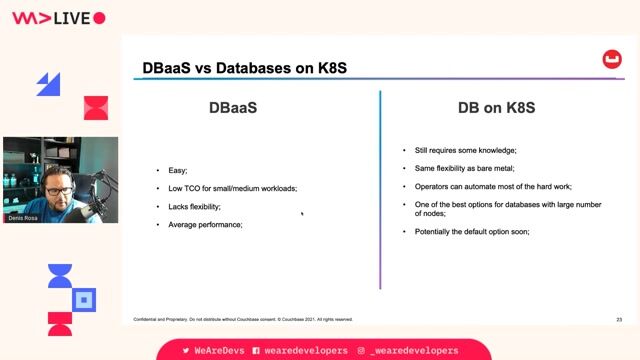
Comparing managed DBaaS with databases on Kubernetes
While managed DBaaS is simpler for small workloads, running databases on Kubernetes with operators provides greater flexibility, control, and cost-effectiveness at scale.
#9about 4 minutes
Storage and performance considerations on Kubernetes
Using local persistent storage is recommended for performance, and benchmarks show only a minimal 3-4% overhead when running databases in containers versus bare metal.
#10about 1 minute
Key takeaways for running databases on Kubernetes
When running databases on Kubernetes, choose a mature operator, prefer local persistent storage, and account for a small performance overhead compared to bare metal.
Related jobs
Jobs that call for the skills explored in this talk.


Matching moments
03:02 MIN
A DBA's journey to running SQL Server on Kubernetes
Adjusting Pod Eviction Timings in Kubernetes
Unlock Moments
Create a free account to watch a limited number of Moments each month.
Upgrade to PRO for unlimited access to the full archive.
Upgrade to PRO for unlimited access to the full archive.
You have an account? Log in
04:52 MIN
Managing any Oracle database with a Kubernetes operator
Kubernetes and Microservices with Multi-Model Databases
Unlock Moments
Create a free account to watch a limited number of Moments each month.
Upgrade to PRO for unlimited access to the full archive.
Upgrade to PRO for unlimited access to the full archive.
You have an account? Log in
03:38 MIN
Comparing self-managed Kubernetes databases to DBaaS
Databases on Kubernetes
Unlock Moments
Create a free account to watch a limited number of Moments each month.
Upgrade to PRO for unlimited access to the full archive.
Upgrade to PRO for unlimited access to the full archive.
You have an account? Log in
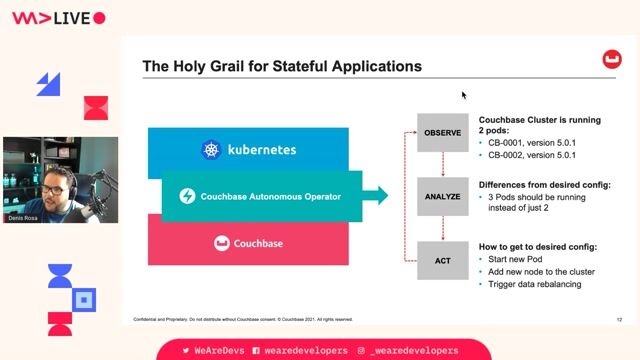
08:49 MIN
Deploying a database cluster using a YAML file
Databases on Kubernetes
Unlock Moments
Create a free account to watch a limited number of Moments each month.
Upgrade to PRO for unlimited access to the full archive.
Upgrade to PRO for unlimited access to the full archive.
You have an account? Log in
04:41 MIN
Why running databases in containers is now a reality
Databases on Kubernetes
Unlock Moments
Create a free account to watch a limited number of Moments each month.
Upgrade to PRO for unlimited access to the full archive.
Upgrade to PRO for unlimited access to the full archive.
You have an account? Log in
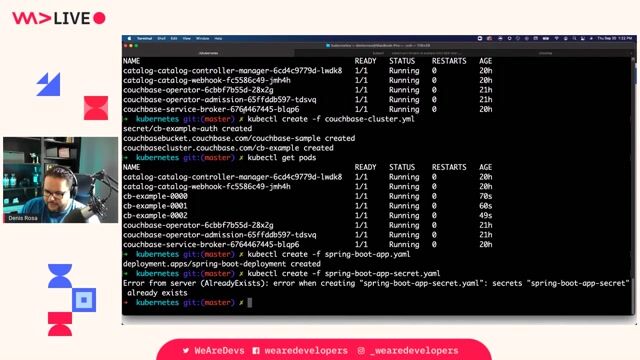
07:53 MIN
Automating database recovery and scaling with an operator
Databases on Kubernetes
Unlock Moments
Create a free account to watch a limited number of Moments each month.
Upgrade to PRO for unlimited access to the full archive.
Upgrade to PRO for unlimited access to the full archive.
You have an account? Log in
04:45 MIN
Q&A on hybrid cloud strategy and data management
Embracing the Hybrid Cloud: Unlocking Success with Open Source Technologies
Unlock Moments
Create a free account to watch a limited number of Moments each month.
Upgrade to PRO for unlimited access to the full archive.
Upgrade to PRO for unlimited access to the full archive.
You have an account? Log in
02:05 MIN
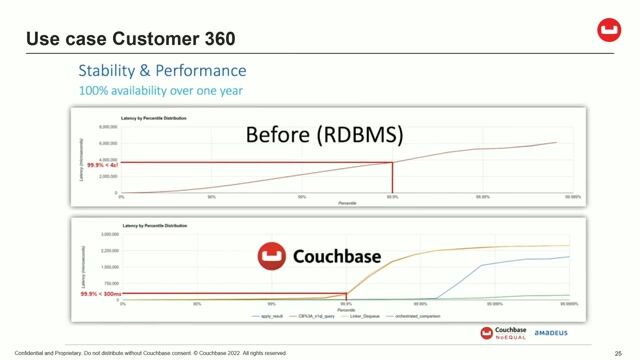
Implementing a global hybrid-cloud database architecture
Database Magic behind 40 Million operations/s
Unlock Moments
Create a free account to watch a limited number of Moments each month.
Upgrade to PRO for unlimited access to the full archive.
Upgrade to PRO for unlimited access to the full archive.
You have an account? Log in
Featured Partners
Related Videos
 48:45
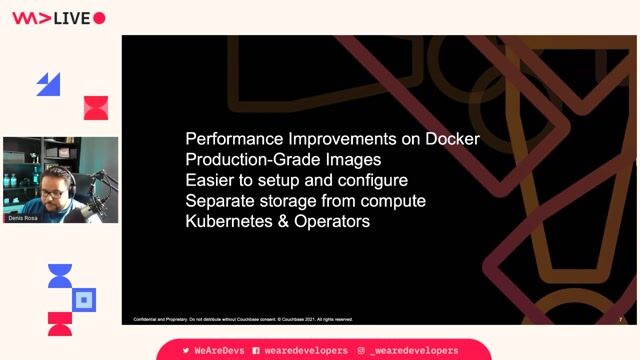
48:45Databases on Kubernetes
Denis Souza Rosa
 43:28
43:28Tomorrow's cloud data platforms - fully managed database-as-a-service (DBaaS)
Gregor Bauer
 57:24
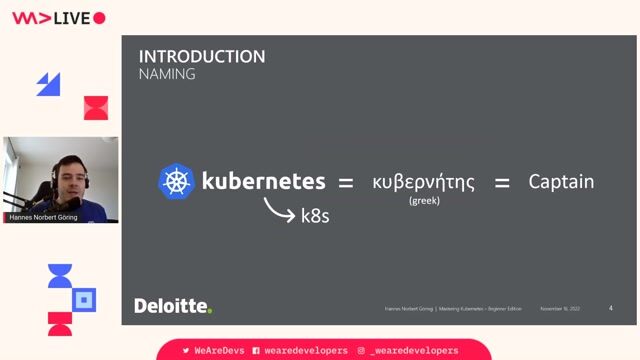
57:24Mastering Kubernetes – Beginner Edition
Hannes Norbert Göring
 29:30
29:30Kubernetes and Microservices with Multi-Model Databases
Wei Hu
 29:21
29:21Kubernetes Maestro: Dive Deep into Custom Resources to Unleash Next-Level Orchestration Power!
Um e Habiba
 24:22
24:22Database Magic behind 40 Million operations/s
Jürgen Pilz
 29:06
29:06Adjusting Pod Eviction Timings in Kubernetes
Andrew Pruski
 30:35
30:35It's all about the Data
Michael Cade
Related Articles
View all articles



From learning to earning
Jobs that call for the skills explored in this talk.


evoila Frankfurt GmbH
Mainz, Germany
Intermediate
Senior
Kubernetes

Mittwald CM Service GmbH & Co. KG
Espelkamp, Germany
Intermediate
Senior
Linux
Docker
DevOps
Kubernetes

smartclip Europe GmbH
Hamburg, Germany
Intermediate
Senior
GIT
Linux
Python
Kubernetes

iits-consulting GmbH
München, Germany
Intermediate
Go
Docker
DevOps
Kubernetes


AllatNet Recruiting GmbH & Co. KG
DevOps
Openshift
Prometheus
Kubernetes
Continuous Integration
Rocken AG
Remote
CHF110-125K
Senior
DevOps
Openshift
Kubernetes
+1
Stolzberger GmbH
€60-100K
Linux
DevOps
Gitlab
Ansible
+4
Clickhouse
Remote
Intermediate
MySQL
MongoDB
PostgreSQL
Kubernetes