Nathalia Rus
Building a large, complex product from the ground up with typescript & Atomic Design:lessons learned
#1about 2 minutes
Navigating the challenge of scaling a new codebase
Starting with a boilerplate create-react-app requires a clear strategy to build a scalable and maintainable product like those from major tech companies.
#2about 2 minutes
Adopting atomic design for structure and clarity
Design systems like atomic design are crucial for separating UI logic from business logic, leading to cleaner code and better performance.
#3about 3 minutes
A practical guide to the atomic design folder structure
The codebase is organized into atoms, molecules, organisms, pages, and templates, giving every component a designated and predictable place.
#4about 3 minutes
Creating scalable component libraries for icons and buttons
Centralizing components like icons and buttons into their own libraries makes updates, theming, and A/B testing manageable across the application.
#5about 3 minutes
Using Storybook to document and refactor components
Storybook helps document the UI component library, enforce component isolation, and provides a clear path for refactoring an existing codebase to atomic design.
#6about 5 minutes
Balancing pragmatism and avoiding overengineering
While the 'don't repeat yourself' principle is valuable, abstracting core business domain features too early can lead to rigid, hard-to-maintain code.
#7about 3 minutes
Lessons on testing, hooks, and framework lock-in
Prioritizing end-to-end testing on the frontend and using state management libraries like Redux helps avoid framework lock-in and ensures stability.
#8about 4 minutes
Why TypeScript is essential for building large applications
Adopting TypeScript significantly reduces bugs, provides auto-documentation through type definitions, and enforces a more scalable way of thinking.
#9about 2 minutes
How atomic design prevents common frontend anti-patterns
The principles of atomic design naturally discourage common anti-patterns like deeply nested components, which improves performance and maintainability.
Related jobs
Jobs that call for the skills explored in this talk.


Matching moments
05:21 MIN
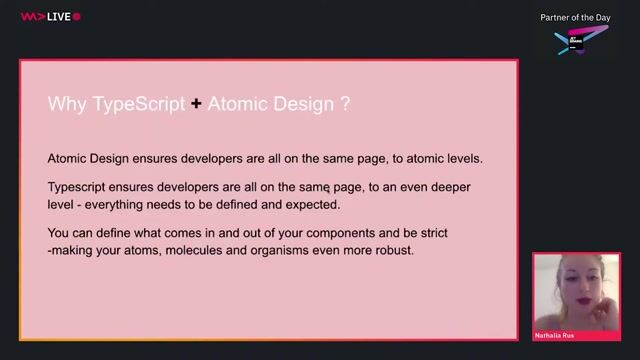
Why TypeScript is the perfect match for atomic design
Typescript, React and Atomic Design - a match made in heaven
Unlock Moments
Create a free account to watch a limited number of Moments each month.
Upgrade to PRO for unlimited access to the full archive.
Upgrade to PRO for unlimited access to the full archive.
You have an account? Log in
02:47 MIN
Defining the core principles of scalable software
Building software that scales with Typescript
Unlock Moments
Create a free account to watch a limited number of Moments each month.
Upgrade to PRO for unlimited access to the full archive.
Upgrade to PRO for unlimited access to the full archive.
You have an account? Log in
02:37 MIN
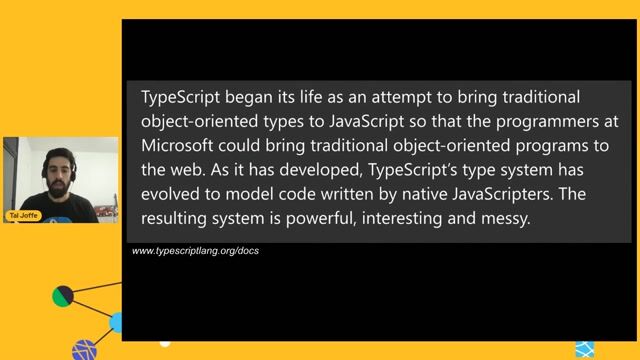
Understanding TypeScript's origins and role in scalability
All you need is types
Unlock Moments
Create a free account to watch a limited number of Moments each month.
Upgrade to PRO for unlimited access to the full archive.
Upgrade to PRO for unlimited access to the full archive.
You have an account? Log in
02:31 MIN
Moving from hacking MVPs to building scalable applications
Typescript, React and Atomic Design - a match made in heaven
Unlock Moments
Create a free account to watch a limited number of Moments each month.
Upgrade to PRO for unlimited access to the full archive.
Upgrade to PRO for unlimited access to the full archive.
You have an account? Log in
02:23 MIN
Structuring code with the atomic design methodology
Building the Right Product and Building It Right: A Glimpse into Extreme Programming, Atomic Design
Unlock Moments
Create a free account to watch a limited number of Moments each month.
Upgrade to PRO for unlimited access to the full archive.
Upgrade to PRO for unlimited access to the full archive.
You have an account? Log in
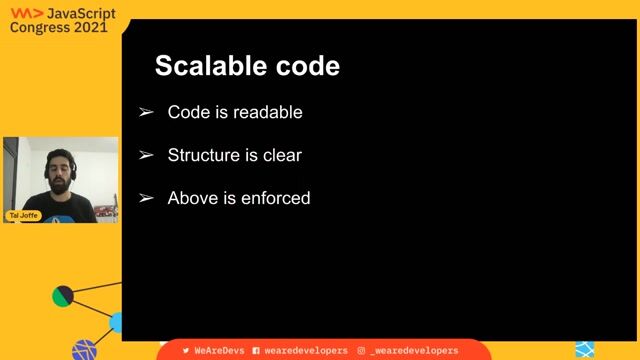
03:59 MIN
Achieving scalability with readability, structure, and enforcement
All you need is types
Unlock Moments
Create a free account to watch a limited number of Moments each month.
Upgrade to PRO for unlimited access to the full archive.
Upgrade to PRO for unlimited access to the full archive.
You have an account? Log in
03:38 MIN
Structuring a production project with web components
Frameworkless: How to use Web-Components in production?
Unlock Moments
Create a free account to watch a limited number of Moments each month.
Upgrade to PRO for unlimited access to the full archive.
Upgrade to PRO for unlimited access to the full archive.
You have an account? Log in
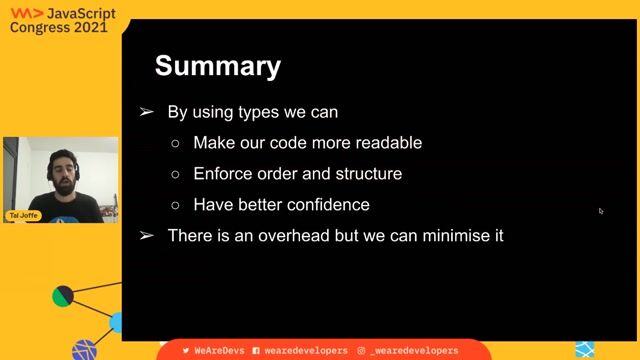
01:48 MIN
Summary of using types for scalable codebases
All you need is types
Unlock Moments
Create a free account to watch a limited number of Moments each month.
Upgrade to PRO for unlimited access to the full archive.
Upgrade to PRO for unlimited access to the full archive.
You have an account? Log in
Featured Partners
Related Videos
 40:05
40:05Typescript, React and Atomic Design - a match made in heaven
Nathalia Rus
 37:18
37:18Building software that scales with Typescript
Tal Joffe
 43:20
43:20Microfrontends at Scale
Josh Goldberg
 31:13
31:13Lies we Tell Ourselves As Developers
Stefan Baumgartner
 32:28
32:284 Steps from JavaScript to TypeScript
Phil Nash
 48:56
48:56All you need is types
Tal Joffe
 30:40
30:40What the heck do "declarative" and "reactive" actually mean?
André Kovac
 26:00
26:00To New Frontiers: The Future of Frontend Development
Rainer Hahnekamp
Related Articles
View all articles



From learning to earning
Jobs that call for the skills explored in this talk.


doinstruct Software GmbH
Berlin, Germany
Senior
GIT
JavaScript
TypeScript


Speech Processing Solutions
Vienna, Austria
Intermediate
CSS
HTML
JavaScript
TypeScript

Schulz.codes GmbH
Darmstadt, Germany
Intermediate
Senior
React
JavaScript
TypeScript

autoiXpert GmbH & Co. KG
Stuttgart, Germany
Senior
Node.js
Angular
MongoDB
TypeScript


GEBIT Solutions GmbH
Remote
Senior
GIT
DevOps
Node.js
TypeScript
+1
Atolls
Junior
NoSQL
Node.js
Next.js
Symfony
GraphQL
+2
Atolls
Junior
NoSQL
Node.js
Next.js
Symfony
GraphQL
+2
Mindpeak
Intermediate
Linux
WebGL
Docker
TypeScript
Machine Learning