
Milica Aleksic
Making the switch from web to mobile development
#1about 3 minutes
Comparing web, native, and cross-platform mobile development
Native development requires separate codebases for iOS and Android, while React Native allows a single JavaScript codebase for both platforms.
#2about 3 minutes
Setting up the mobile development environment
Mobile development requires Xcode and Android Studio, and testing on real devices is crucial because simulators can be misleading.
#3about 4 minutes
Using React Native components instead of HTML
React Native replaces HTML tags like `div` and `p` with core components such as `View` and `Text` that compile to native UI elements.
#4about 2 minutes
Styling applications with JavaScript and Flexbox
Styling in React Native uses JavaScript objects via StyleSheets instead of CSS, with Flexbox defaulting to a column direction.
#5about 3 minutes
Creating animations for a native user experience
React Native provides two systems, the Animated API and LayoutAnimation, to create fluid animations that meet user expectations on mobile.
#6about 2 minutes
Managing navigation with screens instead of URLs
Mobile navigation uses a stack-based system with screens, unlike web's URL-based routing, managed by libraries like React Navigation.
#7about 2 minutes
Writing platform-specific code for iOS and Android
Use the Platform module for small inline differences or platform-specific file extensions like `.ios.js` for larger component variations.
#8about 2 minutes
Handling app state and native device features
Mobile apps must manage their state (foreground, background, inactive) using AppState and handle permissions for native features like the camera.
#9about 3 minutes
Designing for offline and slow network conditions
Build robust mobile apps by handling offline states and slow connections with cached data and retries, using tools like the NetInfo package.
#10about 2 minutes
Sharing code between web and mobile applications
Use tools like React Native Web or a monorepo with Yarn Workspaces and Lerna to share business logic across web and mobile platforms.
#11about 3 minutes
Testing and debugging your React Native application
Use Jest and React Native Testing Library for testing, and leverage Flipper for powerful debugging of network requests, layouts, and logs.
#12about 2 minutes
Deploying your application to the app stores
The deployment process involves building native binaries, submitting them to the App Store and Google Play, and navigating the review process.
#13about 10 minutes
Q&A: Learning curve, deployment, and team workflows
The speaker answers questions about the learning curve for React developers, identifies deployment as the biggest challenge, and discusses team processes.
Related jobs
Jobs that call for the skills explored in this talk.


Matching moments

02:04 MIN
Why React developers naturally transition to React Native
Challenges of building React and React Native apps
Unlock Moments
Create a free account to watch a limited number of Moments each month.
Upgrade to PRO for unlimited access to the full archive.
Upgrade to PRO for unlimited access to the full archive.
You have an account? Log in
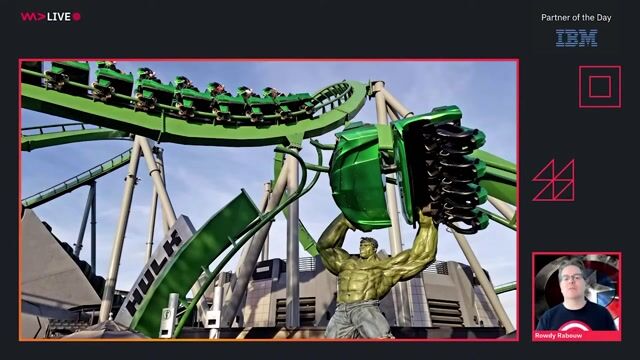
03:13 MIN
The web developer experience on native platforms
Unleash your web skills on native!
Unlock Moments
Create a free account to watch a limited number of Moments each month.
Upgrade to PRO for unlimited access to the full archive.
Upgrade to PRO for unlimited access to the full archive.
You have an account? Log in
06:51 MIN
Understanding the challenges of native mobile development
The perfect CI/CD React Native pipeline with Fastlane
Unlock Moments
Create a free account to watch a limited number of Moments each month.
Upgrade to PRO for unlimited access to the full archive.
Upgrade to PRO for unlimited access to the full archive.
You have an account? Log in

02:30 MIN
What is React Native and what will you learn
Hands-on React Native: From Zero to Hero
Unlock Moments
Create a free account to watch a limited number of Moments each month.
Upgrade to PRO for unlimited access to the full archive.
Upgrade to PRO for unlimited access to the full archive.
You have an account? Log in

09:17 MIN
The challenges of cross-platform application development
Project Fugu: Extending the web
Unlock Moments
Create a free account to watch a limited number of Moments each month.
Upgrade to PRO for unlimited access to the full archive.
Upgrade to PRO for unlimited access to the full archive.
You have an account? Log in
01:36 MIN
Understanding hybrid, native, and web development models
View-Transition-API: Gamechanger for hybrid app-development
Unlock Moments
Create a free account to watch a limited number of Moments each month.
Upgrade to PRO for unlimited access to the full archive.
Upgrade to PRO for unlimited access to the full archive.
You have an account? Log in
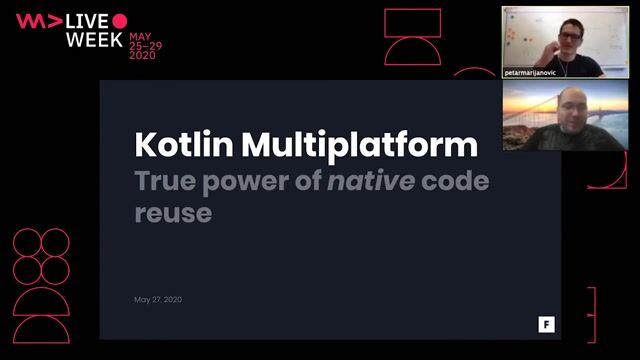
06:46 MIN
Exploring the benefits of multi-platform mobile development
Kotlin Multiplatform - True power of native code reuse
Unlock Moments
Create a free account to watch a limited number of Moments each month.
Upgrade to PRO for unlimited access to the full archive.
Upgrade to PRO for unlimited access to the full archive.
You have an account? Log in
03:54 MIN
Q&A on refactoring SPAs and page transitions
The Lean Web
Unlock Moments
Create a free account to watch a limited number of Moments each month.
Upgrade to PRO for unlimited access to the full archive.
Upgrade to PRO for unlimited access to the full archive.
You have an account? Log in
Featured Partners
Related Videos
 35:09
35:09There's an app for that - on the role of cross platform development in the app development ecosystem
Aleksandra Desmurs-Linczewska
 52:01
52:01Unleash your web skills on native!
Rowdy Rabouw
 43:31
43:31Scalable architecture for mobile apps
Nachiket Apte
 25:15
25:15Optimizing Your App for Success: Tips and Techniques for managing slow devices
Milica Aleksic & Nemanja Petrovic
 24:10
24:10Challenges of building React and React Native apps
Milica Aleksic & Stefan Nikolic
 39:42
39:42Hands-on React Native: From Zero to Hero
Dmitry Vinnik
 54:51
54:51The perfect CI/CD React Native pipeline with Fastlane
Edoardo Dusi
 44:09
44:09Mobile at a Crossroads: The Declarative UI App Revolution
Peter Steinberger
Related Articles
View all articles



From learning to earning
Jobs that call for the skills explored in this talk.


Nia Health GmbH
Berlin, Germany
Intermediate
Senior
CSS
GIT
React
TypeScript


Optimi Solutions GmbH
Remote
GIT
TypeScript
React Native
Continuous Integration